
Spring is Coming: Outdoor Living Features to Plan Now for Your Custom Home
It's mid-February. The days are getting longer. The seed catalogs are arriving. And somewhere in the back of your mind, a voice is whispering: spring is coming.
Here in Central Virginia, we're in that strange in-between season—too early to plant, too late to pretend winter will last forever. It's the perfect time to start thinking about outdoor living. Not just dreaming about it. Planning it.
If you're building a custom home, the outdoor living decisions you make now directly affect what you'll enjoy this summer—and for years to come. Unlike interior finishes that can be updated later, your outdoor spaces are largely determined by your home's footprint, orientation, and infrastructure. The covered porch that isn't in the plan? You can't add it in June when you realize how much you want it.
So while you're stuck inside watching it rain (or snow, or that weird wintry mix Virginia loves), let's talk about designing outdoor spaces you'll actually use.
Why Central Virginia is Perfect for Outdoor Living
Before we dive into features, let's appreciate what we have here.
Central Virginia offers a genuine four-season climate—but the "outdoor living season" stretches longer than you might think. From late March through early November, we enjoy months of usable outdoor time. Even winter offers mild stretches where a fire pit and a fleece make an evening outside perfectly pleasant.
Compare that to friends up north who get maybe four months of outdoor weather, or friends in the Deep South who spend half the year hiding from heat and humidity. We've got it pretty good.
This extended season means outdoor living space isn't a luxury—it's usable square footage. A well-designed porch, patio, or deck effectively expands your home for more than half the year. And in Central Virginia's housing market, these spaces add genuine resale value.
The question isn't whether to invest in outdoor living. It's how to invest wisely.
The Screened Porch: Central Virginia's MVP
If we could only recommend one outdoor living feature for this region, it would be the screened porch. Nothing else delivers the same combination of usability, comfort, and bug-free relaxation.
Why Screened Porches Win Here
The mosquito factor. Let's be honest: Virginia summers include mosquitoes. A beautiful open deck becomes miserable when you're being eaten alive. A screened porch lets you enjoy the evening air without becoming a buffet.
Extended season. Screens block wind while letting breezes through. Add a ceiling fan to push warm air down in spring and fall, and you've got a comfortable space from March through November—sometimes longer.
Rain doesn't end the party. A covered, screened porch lets you sit outside during a summer thunderstorm, which is one of life's genuine pleasures. The smell of rain, the sound on the roof, the cool air rolling in—all without getting wet.
Flexible use. Morning coffee. Afternoon reading. Evening dinners. Late-night conversations. A screened porch accommodates all of it, every day, for most of the year.
Design Considerations
Size matters. A screened porch needs to be large enough to furnish comfortably. We typically recommend a minimum of 12' x 14' for a seating area, larger if you want dining space too. A 14' x 18' or 16' x 20' porch accommodates both lounging and dining without feeling cramped.
Ceiling height. Vaulted or raised ceilings make screened porches feel more expansive and improve air circulation. A flat 8' ceiling can feel oppressive; 10' or a vaulted roofline transforms the space.
Flooring. Options range from painted concrete (budget-friendly) to tile, stone, or composite decking. Consider drainage—screened porches get wet from wind-blown rain—and maintenance requirements.
Ceiling fans. Non-negotiable. A good ceiling fan extends your comfortable season by weeks in both spring and fall.
Lighting. Recessed lights, a central fixture, or even a chandelier (yes, on a porch) let you use the space after dark.
Electrical. Plan for outlets—you'll want them for lamps, speakers, a TV, or whatever else migrates outside.
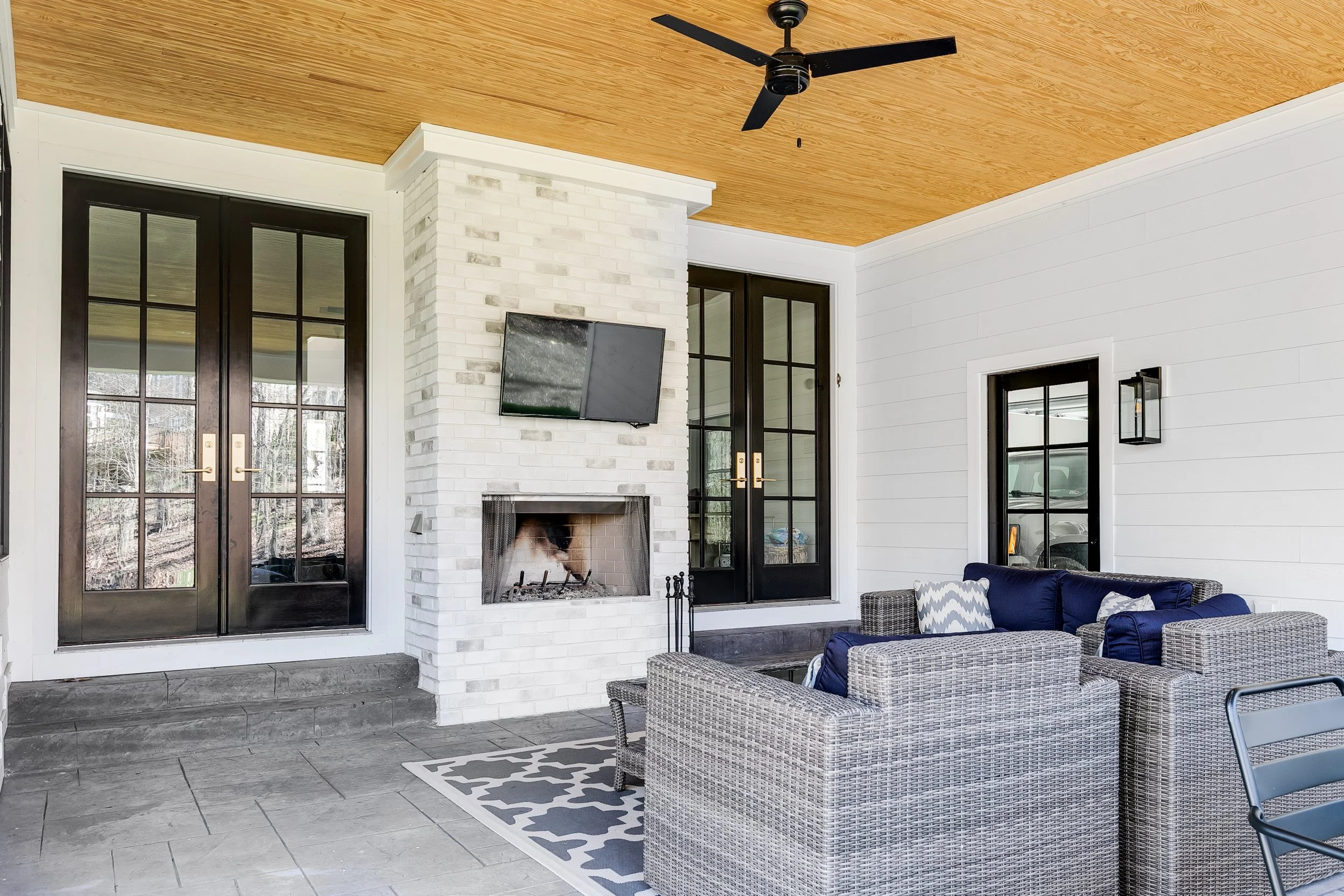
The fireplace question. A screened porch with a fireplace is a next-level feature. Gas fireplaces work best (no smoke issues), and they extend your usable season into genuine cold weather. It's an investment, but clients who include them use their porches year-round.
Open Porches and Covered Patios: The Flexible Alternative
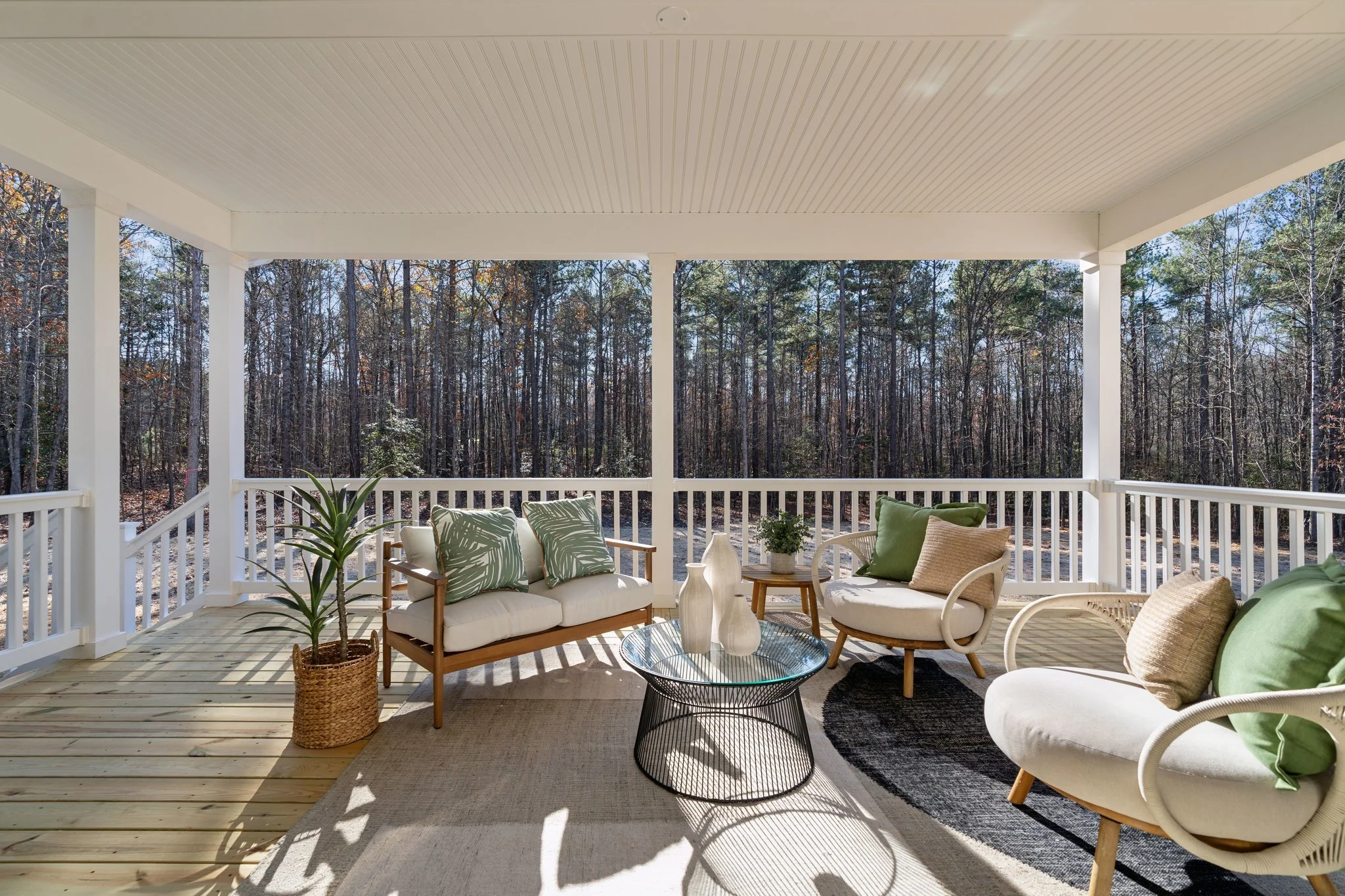
Not everyone wants or needs a screened porch. An open covered porch or patio offers many of the same benefits with a different feel.
The Case for Open Air
Unobstructed views. Screens, even fine mesh, slightly soften your view of the yard, trees, and sky. An open porch gives you the full picture.
Easier flow to yard. No screen doors to navigate when kids are running in and out, when you're carrying food to the grill, or when the dog wants out for the fifteenth time.
Lower cost. Screening adds expense—both the screens themselves and the structural requirements. An open covered porch is typically less expensive than an equivalent screened space.
Different aesthetic. Some architectural styles look better with open porches. A farmhouse with a big covered front porch, for example, would lose something behind screens.

Making Open Porches Work
Ceiling fans with good motors. Air movement helps with bugs—mosquitoes are weak fliers and struggle in a breeze. A powerful ceiling fan creates enough airflow to reduce (though not eliminate) the bug factor.
Consider mosquito curtains. Outdoor curtain panels can be drawn when bugs are bad and tied back when they're not. It's not as seamless as screens, but it's a flexible middle ground.
Orient away from prevailing bugs. This sounds strange, but mosquitoes tend to breed in certain areas (standing water, dense vegetation). If you know where they come from on your property, orient your outdoor living away from that direction.
Accept the trade-off. Open porches work best for daytime use and those magical bug-free evenings. If you want to sit outside every summer night without concern, screens are worth the investment.
Decks vs. Patios: Choosing Your Platform
The surface beneath your outdoor furniture matters more than you might think. Decks and patios each have advantages, and the right choice depends on your site, budget, and preferences.
The Deck Advantage

Works with grade changes. If your lot slopes away from the house, a deck can extend out over the grade change, creating level outdoor space where a patio would require extensive (expensive) grading.
Warmer underfoot. Wood and composite decking feel warmer than stone or concrete—noticeable on cool spring mornings or fall evenings.
Easier drainage. Water falls through deck boards; no puddles, no drainage planning.
Easier on joints. Slightly more give than hard surfaces—a subtle but real comfort factor.
Aesthetic warmth. Wood and wood-look composites have a natural warmth that complements many home styles.
The Patio Advantage
Longevity. A well-built stone or paver patio can last essentially forever with minimal maintenance. Decks, even composite, eventually need repair or replacement.
Fire-friendly. Fire pits on wood decks are risky. Stone and concrete patios? No problem.
Lower maintenance. No staining, sealing, or board replacement. Occasional pressure washing is usually all that's needed.
Design flexibility. Pavers and stone come in countless patterns, colors, and textures. You can create curves, inlays, borders, and other design elements that are difficult or impossible with decking.
Cooler in direct sun. Light-colored stone or concrete stays cooler than dark composite decking in full summer sun.
Material Options
For decks:
Pressure-treated lumber: Budget-friendly, requires regular maintenance (staining/sealing), shorter lifespan
Composite decking: Higher upfront cost, minimal maintenance, longer lifespan, wide range of colors and textures
Hardwood (ipe, teak): Beautiful and durable, expensive, requires maintenance to preserve color
For patios:
Concrete: Most affordable, can be stamped or stained for visual interest, may crack over time
Pavers: Mid-range cost, huge variety of styles, easy to repair (replace individual pavers)
Natural stone (flagstone, bluestone): Premium option, unique character, highest cost
The Combination Approach
Many of our clients combine both: a deck off the main living area for everyday use, plus a patio around a fire pit further into the yard. The deck handles dining and lounging; the patio creates a separate destination for evening fires. Different surfaces define different zones.
Outdoor Kitchens: From Simple to Spectacular
The outdoor kitchen has evolved from "a grill on the deck" to a genuine extension of the home's cooking and entertaining space. How far you go depends on how you'll actually use it.
The Three Tiers
Tier 1: The Grill Station A built-in grill with counter space on both sides. That's it. Simple, functional, and a huge upgrade from a freestanding grill. Add a small cabinet below for tools and supplies, and you've covered 90% of outdoor cooking needs.
Estimated investment: $3,000–$8,000
Tier 2: The Working Kitchen Built-in grill plus a sink, under-counter refrigerator, and more generous counter space. The sink is the game-changer—suddenly you can prep outside, wash produce, rinse hands, and clean up without running inside constantly. The refrigerator keeps drinks and perishables at hand.
Estimated investment: $10,000–$25,000
Tier 3: The Full Outdoor Kitchen Everything above, plus additional cooking appliances: side burners, pizza ovens, smokers, warming drawers. Possibly a kegerator. Dedicated storage for dishes and serving ware. Sometimes a dishwasher. This is a full second kitchen, designed for someone who does serious outdoor entertaining.
Estimated investment: $25,000–$50,000+
Planning Considerations
Utility runs. Gas, water, and electrical all need to reach your outdoor kitchen. These are easy to include during construction and expensive to add later. Plan the location now, even if you're building a simple grill station initially—future upgrades will be much easier.
Covered vs. exposed. Built-in appliances, especially refrigerators, last longer under cover. If your outdoor kitchen is fully exposed, choose appliances rated for it and expect more maintenance.
Counter material. Granite is popular for its durability and heat resistance. Tile works but grout requires maintenance. Concrete can be customized but may stain. Avoid materials that can't handle weather and temperature swings.
Proximity to indoor kitchen. The outdoor kitchen should be close enough to the indoor kitchen that carrying supplies back and forth isn't a hike, but far enough that smoke and grease don't affect the house.
Fire Features: The Gathering Point
Nothing draws people together like fire. Whether it's a simple fire pit or an elaborate outdoor fireplace, a fire feature creates a natural gathering spot and extends your outdoor season into cooler weather.
Fire Pits
Pros: More affordable, can be placed away from the house (creating a destination in the yard), 360-degree seating around the fire, easier to install
Cons: Smoke follows you (no matter where you sit), requires fire-safe surface below, less usable in wind, ashes to manage
Options range from: Simple steel bowls ($200) to built-in stone surrounds ($2,000–$5,000) to gas-powered fire tables ($1,000–$4,000)
Outdoor Fireplaces
Pros: Smoke vents upward (no "smoke follows you" problem), more dramatic visual impact, better wind protection, can be incorporated into covered porches
Cons: Higher cost, requires more planning during design, fixed location
Investment: $5,000–$20,000+ depending on size and materials
Gas vs. Wood-Burning
Gas fire features: Instant on/off, no smoke, no ash cleanup, consistent flame. Perfect for screened porches and covered spaces where smoke would be a problem. Requires gas line.
Wood-burning: The authentic crackle and aroma of a real fire. More work (buying or cutting wood, managing the fire, cleaning up). Better for uncovered spaces away from the house.
The Details That Make It Work
Beyond the big features, several smaller decisions significantly impact how much you'll actually use your outdoor spaces.
Shade and Sun Control
Porch orientation. A porch facing west will be hot in summer afternoons. East-facing porches get morning sun and afternoon shade—often ideal. South-facing works well in winter but may need additional shade in summer. North-facing stays cool but may feel dim.
Shade structures. Pergolas, arbors, and shade sails can supplement or replace solid roofing. A pergola with retractable shade fabric gives you options.
Ceiling fans. Mentioned before, but worth repeating—they make a dramatic difference in comfort.
Outdoor Lighting
Ambient lighting: Soffit lights, rope lighting under railings, or landscape lighting around the patio create atmosphere without harsh brightness.
Task lighting: Focused light over cooking and dining areas lets you actually see what you're doing.
Accent lighting: Uplighting on trees, downlighting from branches, path lighting to the fire pit—these create magic after dark.
Smart controls: Integrate outdoor lighting with your home system so you can set scenes, schedules, and control from your phone.
Sound
Pre-wire for outdoor speakers. Weather-resistant speakers mounted under soffits or in landscape rocks let you enjoy music, games, or podcasts outside without hauling a portable speaker around.
Consider the neighbors. Sound carries outdoors. Orient speakers thoughtfully and keep late-night volume reasonable.
Storage
Where do cushions go during storms? A storage bench, deck box, or nearby closet keeps cushions dry and extends their life.
Grill tools, firewood, outdoor games: Plan storage for everything that lives outside. It's amazing how much accumulates.
Planning Timeline: Why Now Matters
If you're building a custom home and want to enjoy outdoor living this summer, here's the reality:
Design phase: Outdoor living features need to be part of your home design, not an afterthought. The roofline, foundation, and utility runs all need to accommodate your outdoor plans. This happens now—during planning—not later.
Permitting: Covered structures, decks, and outdoor kitchens typically require permits. This adds time to the process and needs to be factored into your schedule.
Construction sequence: Outdoor features often happen after the house is weathered-in but before final landscaping. If your builder knows the plan, they can schedule trades efficiently.
Lead times: Some materials—natural stone, certain paver styles, custom outdoor kitchen components—have lead times. Ordering early prevents delays.
The bottom line: Outdoor features planned during design and included in construction are less expensive and better integrated than features added after the fact. A covered porch that's part of the original roofline looks and functions better than one tacked on later. Utility runs for outdoor kitchens cost a fraction during construction versus retrofitting.
If you're starting a custom home build now, you're in perfect position to enjoy your outdoor living spaces by late summer. If you wait to figure it out, you might be waiting another year.
Outdoor Living Across Keel Floor Plans
Most Keel Custom Homes floor plans include outdoor living options—and all can be customized to expand or modify these spaces.
Standard features in many plans:
Covered rear porches
Optional screened porch conversions
Deck or patio-ready layouts
Popular customizations:
Extended covered porches for larger outdoor living areas
Screened porch additions or conversions
Outdoor fireplace integration
Outdoor kitchen rough-ins (gas, water, electric)
Wraparound porches on appropriate lot orientations
During your design meetings, we'll discuss how you want to use your outdoor spaces and recommend modifications that make sense for your lot, budget, and lifestyle.
Dreaming of Summer? Let's Plan for It.
Presidents' Day weekend is traditionally when we start believing spring might actually arrive. The hardware stores fill up with eager gardeners. The outdoor furniture displays appear. Hope returns.
If you're building a custom home, that hope can become something concrete: a screened porch where you'll have morning coffee, a patio where you'll host summer dinners, a fire pit where you'll watch the stars on fall evenings.
But it starts with planning. Now. Before spring arrives. Before construction windows fill up. Before summer sneaks up on you.
Let's talk about what outdoor living could look like in your custom home. Explore our floor plans or schedule a consultation to walk through your options.
Spring is coming. Let's be ready.
— The Keel Custom Homes Team