
From First Estimate to Fixed Price: Keel's Three Pricing Milestones
When most people start the custom home process, they expect a single number. "What does it cost to build a 2,500-square-foot home?" feels like a simple question — and plenty of builder websites will give you a simple answer (usually wrapped around "$X per square foot").
The honest answer is more nuanced. A custom home isn't a product with a sticker price. It's a series of decisions — about land, structure, materials, and finishes — and the price tightens as those decisions get made. A builder who hands you a single, fixed price on day one is either guessing high to protect themselves, or quoting low knowing change orders will fill the gap later.
We do it differently. At Keel, we use a three-milestone pricing process that follows the actual flow of decisions you'll be making. The price gets more precise at each step, and we only move to the next milestone once you’re fully comfortable with the current one.
Here's how it works.
Milestone 1
A realistic starting framework based on your plan, your site, and standard allowances. Built to support loan preapproval and confirm feasibility.
Milestone 2
Plan, site, structure, and exterior selections are locked in. Pricing tightens significantly as the biggest sources of uncertainty are resolved.
Milestone 3
All interior selections finalized, allowances closed out, plans permit-ready. A fixed final price you can build from.
The Principle Behind the Milestones
Pricing a custom home is a conversation between three things: your plan, your site, and your selections. Get all three nailed down, and we can give you a fixed contract price. Until then, every "price" you see is really a refined estimate — accurate within the bounds of what's known and what's still assumed.
The Pricing Principle: Plan + Site + Selections = Price.
Until all three are fully defined, every number you see is a refined estimate — not a fixed price. The milestone process exists to nail those three down in the right order, so the price gets more precise as you get more confident.
That's why we don't pretend to have a final number on day one. We give you the most accurate picture we can with the information available, and we sharpen it together as the home takes shape.
Milestone 1: Conceptual Budget Pricing
Purpose: feasibility and alignment.
Milestone 1 is where most people first see real numbers attached to their custom home. Based on the plan you're considering, your site, and a set of standard allowances and assumptions, we put together a conceptual budget that answers two questions: does this project fit your goals, and is it something a lender will preapprove you for?
This isn't the final price. It's the first realistic planning framework. We're working with preliminary design details, assumed site conditions, and historical cost data from homes we've actually built across the Richmond metro area. There are still variables — actual site conditions, your specific selections, any upgrades you choose — that will refine the number as we move forward.
What goes into a Milestone 1 budget:
A preliminary plan
Standard site and soil assumptions
Allowances for major finish categories (cabinets, flooring, fixtures, counters)
A clear list of items not included — building permits, utility connections, well/septic, landscaping beyond stabilization, and similar costs that often get paid directly by the homeowner
What it's for:
Confirming the home you want is within reach of your budget
Supporting loan preapproval
Aligning expectations before you spend significant time and money on design refinement
Why a Milestone 1 budget is built the way it is: Lenders need a credible total project cost before they'll preapprove you. A Milestone 1 number gives them — and you — a realistic working figure to plan around. It's not designed to be the final price. It's designed to be honest enough to make decisions on without committing to details that haven't been made yet.
Milestone 2: Site, Design, and Structural Alignment
Purpose: lock in size, structure, and exterior to dramatically reduce pricing uncertainty.
This is where your home stops being a concept and starts becoming a real, specific plan. By the end of Milestone 2, we know exactly how big the house is, what it sits on, what its bones are, and what it looks like from the outside.
What changes between Milestone 1 and Milestone 2:
The plan layout and square footage are finalized. Site design is complete — we know where the house sits, how the driveway runs, what gets cleared, and how utilities approach the home. Exterior selections are made and priced (roof, windows, siding, doors). The structural system is defined, and you receive a "Bid Set" of plans that reflects all of it.
What this does to the price:
It tightens it significantly. The two biggest sources of pricing uncertainty in custom building — site work and structural assumptions — are largely resolved here. You'll have a refined price range that's far more accurate than the conceptual budget.
What's locked in by the end of Milestone 2:
✓ Final floor plan and square footage
✓ Site design (house location, driveway, clearing, utilities)
✓ Structural system
✓ Roof, windows, siding, and exterior doors
✓ Bid Set of plans
Everything that affects the bones of the house and how it sits on the land is decided. What's left is what goes inside.
It's still not a fixed contract price, because interior selections haven't been made yet. But everything that affects the bones of the house and its relationship to the land is now locked in. The next conversation is about what's inside.
Curious where you'd land before any of this starts? Our cost calculator gives you a starting estimate in about two minutes — the same kind of figure that feeds into a Milestone 1 conversation.
Milestone 3: Selections and Final Pricing
Purpose: deliver a fixed, final contract price ready for construction.
Milestone 3 is where everything comes together. All interior selections are finalized, every allowance has been replaced with an actual choice, and the home is fully defined. The result: a fixed contract price you can build from.
What's locked in at Milestone 3:
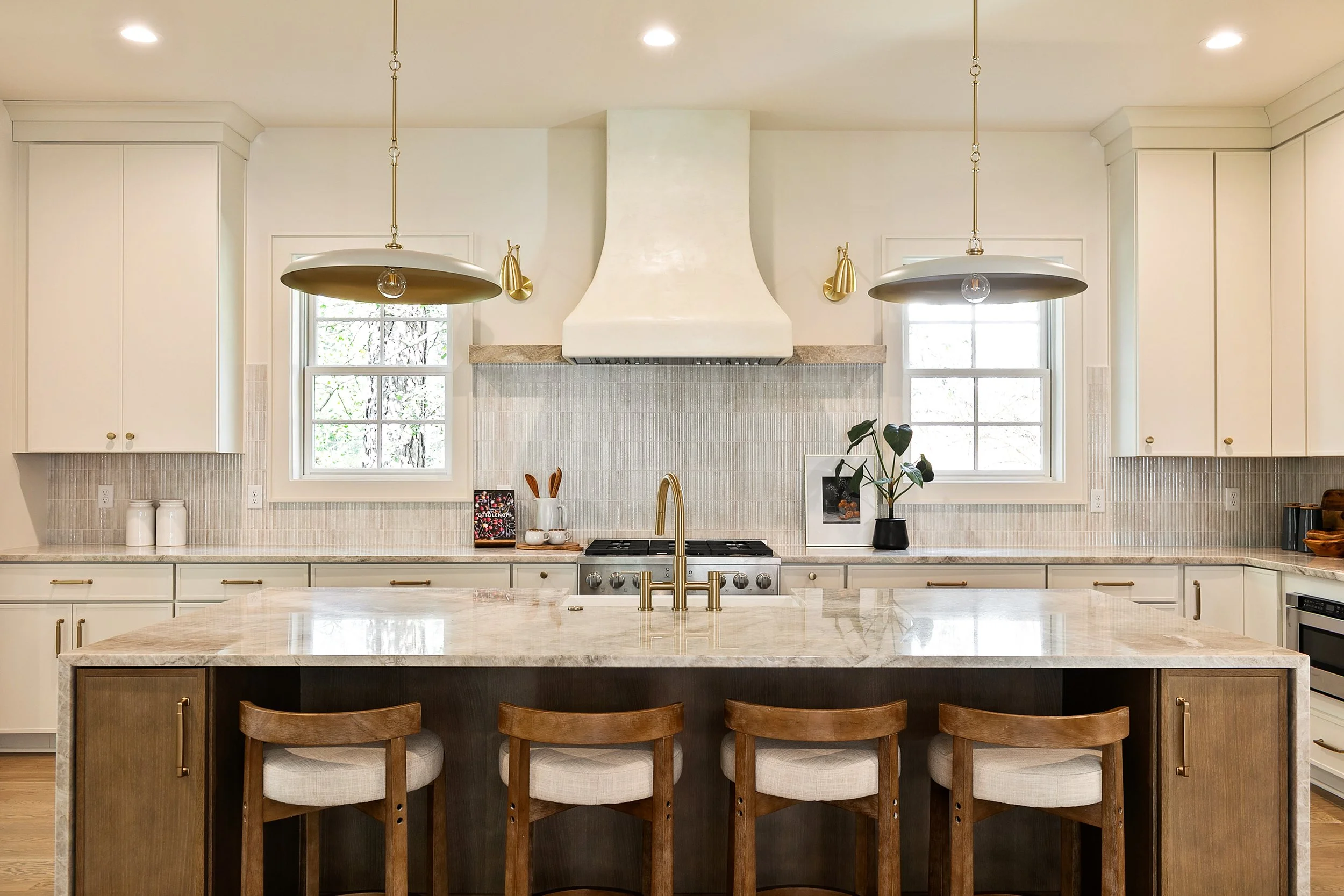
Every interior selection is priced and incorporated — cabinetry, flooring, fixtures, countertops, finishes, trim, doors, paint, stair details. Site evaluation is complete. The plan set is permit-ready. There's no more "we'll figure that out later" — every line item has a real number attached to it.
At this point, the variables that drive most cost-overrun stories in custom building are off the table. You're not going to find out at framing that the foundation needs an extra $20,000 of work, because the site has been evaluated. You're not going to discover at trim that your cabinet selection blew through the allowance, because the cabinets are already chosen and priced into the contract.
By the time you reach the final milestone, your price and scope are fully defined. From there, we’re ready to move into construction. Like anything tied to labor and materials, timing matters, so we keep things moving to ensure your pricing stays current.
Honest pricing requires honest information. We'd rather refine the number with you than rebuild your trust through change orders.
Why This Approach Matters
A lot of buyers get burned in custom building by the same pattern: a low quote, an exciting handshake, and then a year of "well, that's an upgrade" or "we didn't know about that until we dug." The milestone process exists to prevent that — and to give you genuine decision points along the way, where you can adjust scope, slow down, or proceed with confidence.
There's also a design discipline buried in this process. Milestone 2 is when we lock in the structural and exterior decisions — the things you genuinely cannot change later without serious cost. Milestone 3 is when we finalize the finishes — the things you can update over time as your tastes evolve.
Spend on what you can't easily change later; save on what you can. The milestone order reflects this principle. Milestone 2 locks in the things that are permanent — plan, structure, site, exterior. Milestone 3 finalizes the things you could realistically update over time — flooring, counters, fixtures, paint. The decisions get made in the order they should be made.
That ordering isn't accidental. It mirrors how the home will actually be built, and how its costs are actually incurred. Honest pricing requires honest information, and the milestone approach makes sure both arrive at the right time.
Where You Start
If you're at the very beginning, the cost calculator is the easiest first step. It walks you through size, materials, and finishes and gives you a personalized estimate in about two minutes. That estimate is the same kind of starting point that feeds into a Milestone 1 conversation.
If you've already got a plan in mind and a lot in play, give us a call at (804) 206-9280. We can talk through where you are in the process and which milestone makes sense as your starting point.