
Designed for Two: Custom Home Features Couples Love
Here's a truth every couple discovers eventually: love is wonderful, but so is having your own closet.
Building a custom home together is one of the most significant things you'll do as a couple—right up there with getting married, having kids, or deciding whose family to visit for Thanksgiving. It's a process that requires compromise, communication, and occasionally agreeing to disagree about whether the kitchen really needs that pot filler.
But here's the beautiful thing about building custom: you don't have to choose between "his way" and "her way." You can design a home that gives you both what you need—spaces for togetherness and spaces for independence.
With Valentine's Day around the corner, we're celebrating the custom home features that make couples' lives better. These aren't just design trends; they're relationship-savers.
The Bathroom: Where Good Design Saves Marriages
Let's start with the room where most couples first discover they have different living habits: the bathroom.


Dual Vanities: The Non-Negotiable
If there's one feature that appears in nearly every custom home we build for couples, it's dual vanities in the primary bathroom. And for good reason—sharing a single sink with someone you love is a fast track to passive-aggressive toothpaste disputes.
Dual vanities give each person their own space, their own mirror, their own drawer full of products the other person doesn't understand. Morning routines can happen simultaneously instead of sequentially. No one has to wipe someone else's beard trimmings off the counter. It's the little things.
Design tip: If space allows, consider separating the vanities with a makeup station or linen tower between them. This creates visual distinction and additional storage while maintaining the open feel of a shared bathroom.
Separate Toilet Rooms
We'll just say it: some things are better done in private. A water closet—a small enclosed space for the toilet—adds a layer of privacy that couples appreciate more than they might admit. One person can shower while the other has complete privacy. It's a small footprint addition that makes a big difference in daily comfort.
The Shower Question
Walk-in showers have largely replaced traditional tubs in primary bathrooms, but here's where couple preferences often diverge: how big should it be?
Some couples love a spacious shower built for two, complete with dual shower heads and a bench. Others prefer efficient, separate experiences. There's no wrong answer—only your answer. Custom building means you get to decide.
For the soaker: If one of you can't imagine life without a bathtub, consider a freestanding tub as a focal point. It takes up less visual space than a built-in and creates a spa-like atmosphere. Just be honest about whether you'll actually use it—a beautiful tub that becomes a towel holder isn't worth the square footage.
Closets: The Final Frontier
Nothing reveals how differently two people live quite like sharing a closet. One person's "organized" is another person's "chaotic." One folds; one hangs. One owns forty pairs of shoes; one owns four.
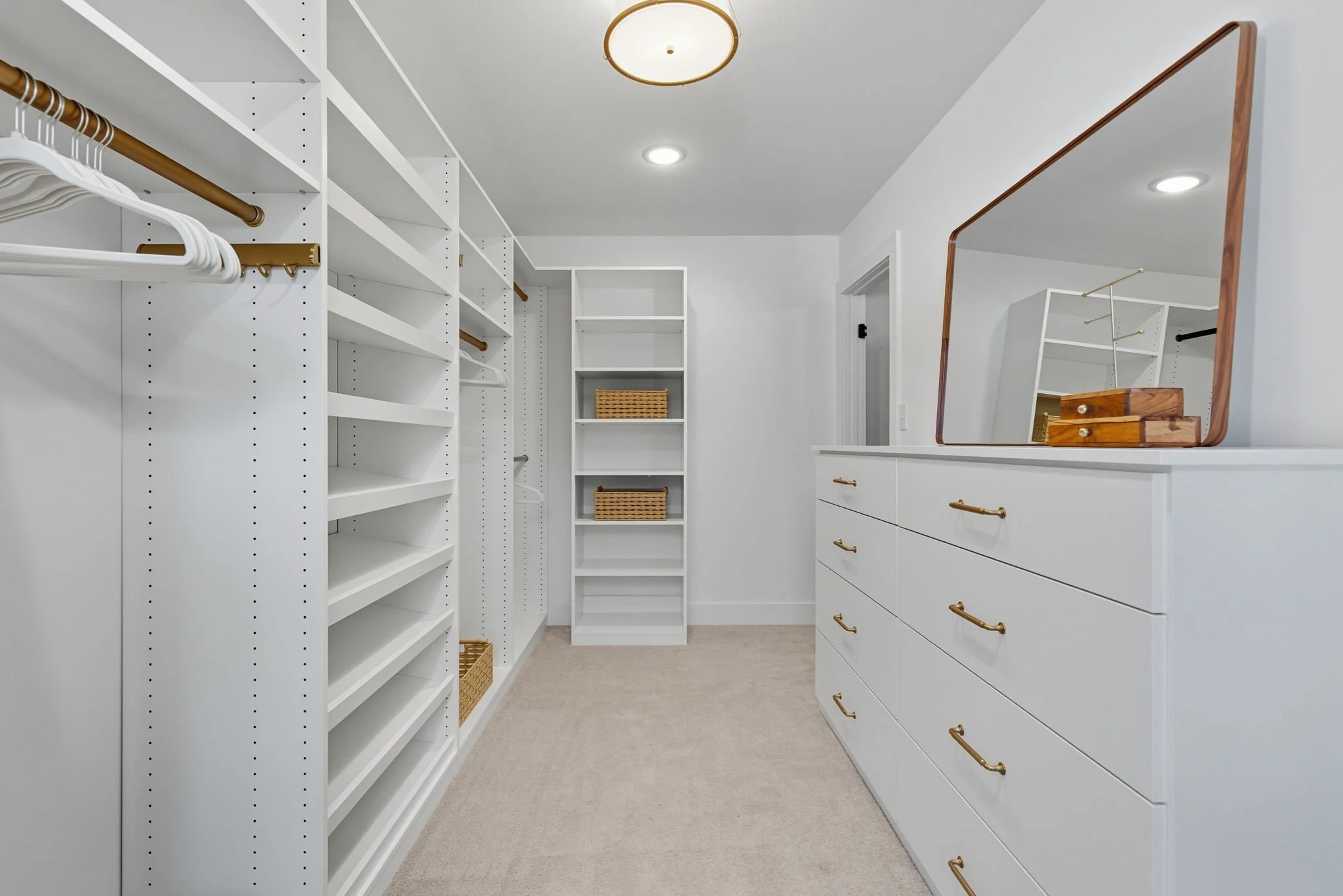
His and Hers Closets
The ultimate solution? Don't share. Many of our floor plans—especially those with larger primary suites—can accommodate separate closets. This isn't about needing more space for stuff (though that's nice too); it's about each person having a space organized exactly the way their brain works.
Separate closets mean:
No compromising on shelving vs. hanging space
No "borrowing" that leads to items disappearing into the void
No judgment about how many white shirts one person really needs
Getting dressed without negotiating for mirror time
The Shared Closet, Optimized
If separate closets aren't in the cards—or if you genuinely prefer sharing—a well-designed walk-in can still give each person their own zone. The key is intentional division: his side and her side, with customized storage for each person's wardrobe.
Design tip: Include a center island with drawers if space permits. It provides additional storage, a surface for laying out outfits, and a natural dividing line between territories.
Working from Home: Together but Apart
Remote and hybrid work aren't going anywhere. For many couples, that means two people working from home—sometimes at the same time, sometimes on calls, sometimes needing absolute quiet.
One home office doesn't cut it anymore.
Dual Office Spaces
The ideal setup for two-career couples is two dedicated workspaces. This doesn't necessarily mean two full rooms—though that's certainly an option. It might mean:
A home office for one, and a converted bedroom or flex space for the other
Built-in desk nooks in different areas of the home
A finished basement office that's acoustically separate from the main floor
The key is that each person has a space where they can close a door, take a video call, and focus without competing for the same square footage.

Real talk: "We'll just share the office" sounds reasonable until one of you is on a conference call while the other needs to make a client presentation. If you both work from home with any regularity, two spaces isn't a luxury—it's a necessity.
The Zoom Room Consideration
At minimum, every home should have at least one space designed with video calls in mind: good lighting (ideally natural light from a window you can face), a clean background, and enough distance from household noise. When you're building custom, you can plan for this intentionally rather than retrofitting a corner of the guest room.
The Bonus Room: A Space of One's Own
Virginia Woolf wrote about the importance of having "a room of one's own." She was talking about creative work, but the principle applies to relationships too: sometimes, you need a space that's just yours.
The "Man Cave" / "She Shed" Phenomenon
Call it what you want—bonus room, flex space, hobby room—the concept is the same: a dedicated space where one person can pursue their interests without taking over shared living areas.
For some, that's a home theater with surround sound and stadium seating. For others, it's a craft room with storage for every supply imaginable. A home gym. A music room. A reading nook with built-in bookshelves. A workshop in the garage.
The beauty of custom building is that you can design these spaces into the home from the start, rather than trying to carve them out of rooms designed for other purposes.
Making It Work for Both
The most successful bonus room strategy we see? Each person gets a space.
Maybe it's a finished basement divided into his workshop and her art studio. Maybe it's a detached garage with enough room for both a car and a serious hobby setup, plus a backyard shed converted into a creative retreat. Maybe it's two smaller flex rooms rather than one large one.
The conversation to have: What do you each need space for? What hobbies or interests get neglected because there's nowhere to do them? What would you do with a room that was entirely yours?
Shared Spaces: Where You Come Together
A home designed for two isn't just about individual spaces—it's also about creating environments that draw you together.
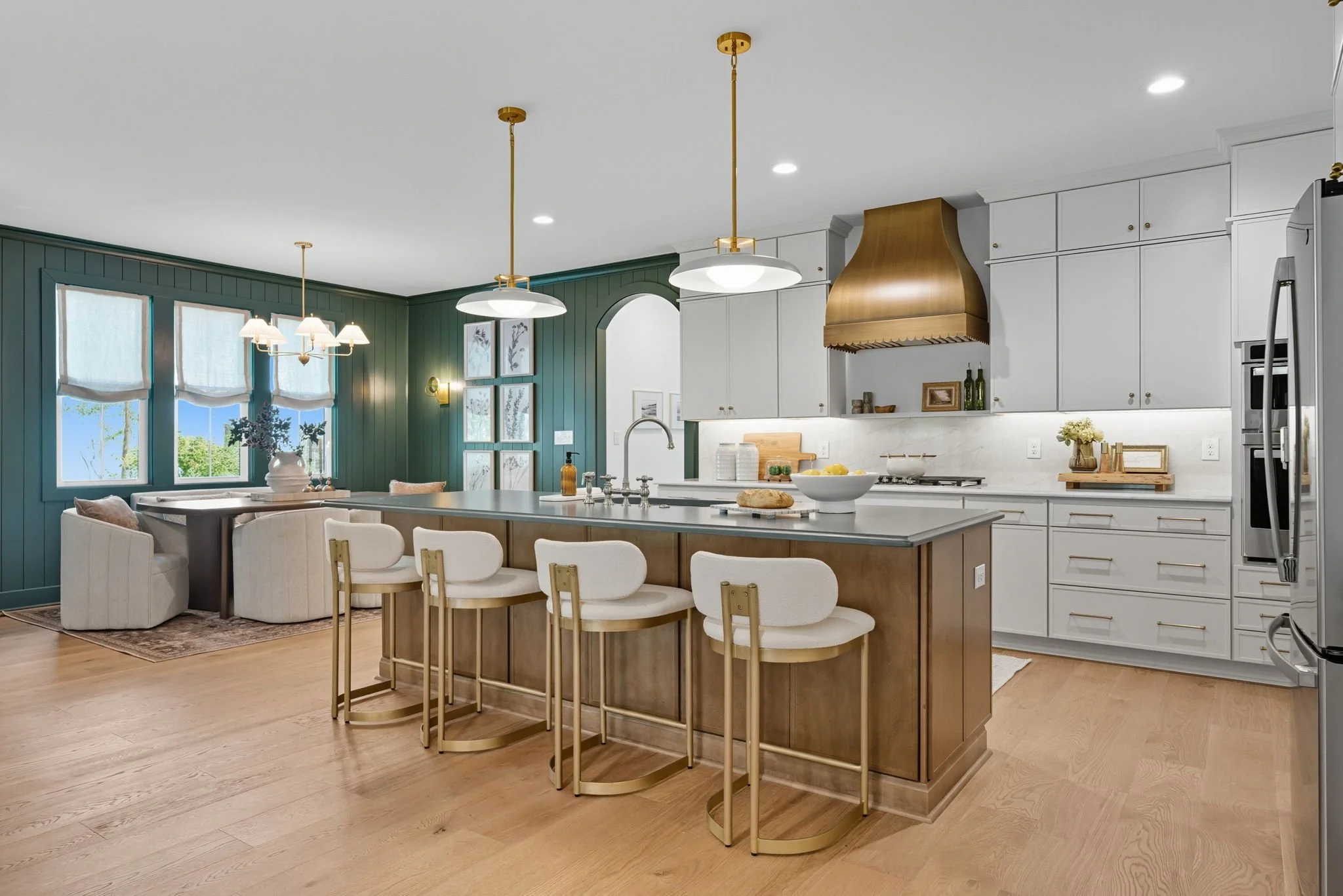
The Kitchen: Heart of the Home
Couples who cook together need a kitchen designed for collaboration, not collision. That means:
Enough counter space for two people to prep simultaneously
A work triangle that doesn't create bottlenecks
An island with seating where one person can keep the cook company (and handle sous chef duties)
Storage that makes sense for how you both use the kitchen
The "too many cooks" solution: Some couples work beautifully together in the kitchen; others have learned that one person cooks while the other stays out of the way. Be honest about which category you fall into, and design accordingly. An open-concept layout with island seating supports the "one cooks, one observes" dynamic perfectly.
Outdoor Living: Your Shared Retreat
If there's one category of space that brings couples together, it's outdoor living. A well-designed porch, patio, or deck becomes the place where you start mornings with coffee, end evenings with a glass of wine, and spend weekend afternoons doing absolutely nothing together.
Features couples love:
Screened porches: All the outdoor ambiance without the mosquitoes. Add a ceiling fan and you've extended your outdoor season by months.
Fire pits or outdoor fireplaces: There's something primal about gathering around a fire. It naturally creates conversation and connection.
Outdoor kitchens: For couples who love to entertain—or just prefer grilling to cooking inside during summer months.
Covered patios: Rain or shine, you can still enjoy your outdoor space.
Design tip: If your lot allows, consider multiple outdoor "rooms"—a dining area, a lounging area, maybe a quiet corner with two chairs and a view. Different spaces for different moods.
The Primary Suite as Sanctuary

Your bedroom should be a retreat from the world—and from the chaos of the rest of the house. For couples, that means designing a primary suite that feels like a private escape:
Enough space that the room doesn't feel cramped by furniture
Quality windows for natural light and cross-ventilation
A layout that accommodates your actual habits (reading in bed? watching TV? both?)
Distance from kids' rooms and main living areas for privacy and quiet
Many of our floor plans position the primary suite on the main floor and away from secondary bedrooms—a configuration that works beautifully for both families with children and empty nesters who want guest rooms separated from their private space.
Features Worth Discussing Before You Build
Building a custom home forces you to make decisions together—hundreds of them. Here are a few conversations worth having early:
Morning routines: Are you both up at the same time, competing for bathroom space? Or does one sleep in while the other is out the door by 6 AM? This affects bathroom design, closet placement, and even bedroom orientation.
Temperature preferences: Is one of you perpetually cold while the other runs hot? Zoned HVAC lets you keep the bedroom at 65° while the home office stays at 72°.
Entertainment styles: Do you host big gatherings or prefer intimate dinners? An open floor plan with a huge kitchen island serves the first; a cozy dining room with a wine bar serves the second.
Sleep habits: Is one of you a night owl and the other an early bird? Consider how bedroom and bathroom placement affects the person still sleeping when the other gets up.
Work styles: Do you need absolute silence to focus, or do you like background noise? This affects how you'll zone home office spaces.
Hobbies that need space: Woodworking, crafting, fitness, music, gardening—what activities are currently squeezed into inadequate spaces or abandoned entirely because there's no room?
The goal isn't to agree on everything. It's to understand each other's needs well enough to design a home that accommodates both.
The Real Gift: Building It Together
Here's something couples often tell us after they've moved into their custom home: the process itself brought them closer.
Yes, there are moments of disagreement. Yes, you'll discover that your partner has surprisingly strong feelings about cabinet hardware. But there's also something deeply bonding about creating a home together—making decisions as a team, watching your shared vision take shape, walking through the framed walls and imagining the life you'll live there.
The home you build becomes more than a house. It becomes a physical representation of your partnership—a place designed around both of you, where every room reflects choices you made together.
That's worth more than any Valentine's Day gift.
Start the Conversation
If building a custom home is on your horizon—whether you're newlyweds, newly empty nesters, or simply ready for a home that fits your life better—we'd love to talk.
At Keel Custom Homes, we specialize in helping couples translate their different needs and preferences into cohesive designs. Our floor plans are flexible, our process is collaborative, and our team knows how to navigate the "he wants / she wants" conversations productively.
Explore our floor plans, or schedule a consultation to start the conversation. Bring your partner. Bring your wish lists. We'll help you find the common ground.
Happy Valentine's Day from all of us at Keel Custom Homes. Here's to love, partnership, and separate closets.
— The Keel Custom Homes Team