
Kitchen Design Trends for 2026: Warmth, Character, and Quiet Luxury
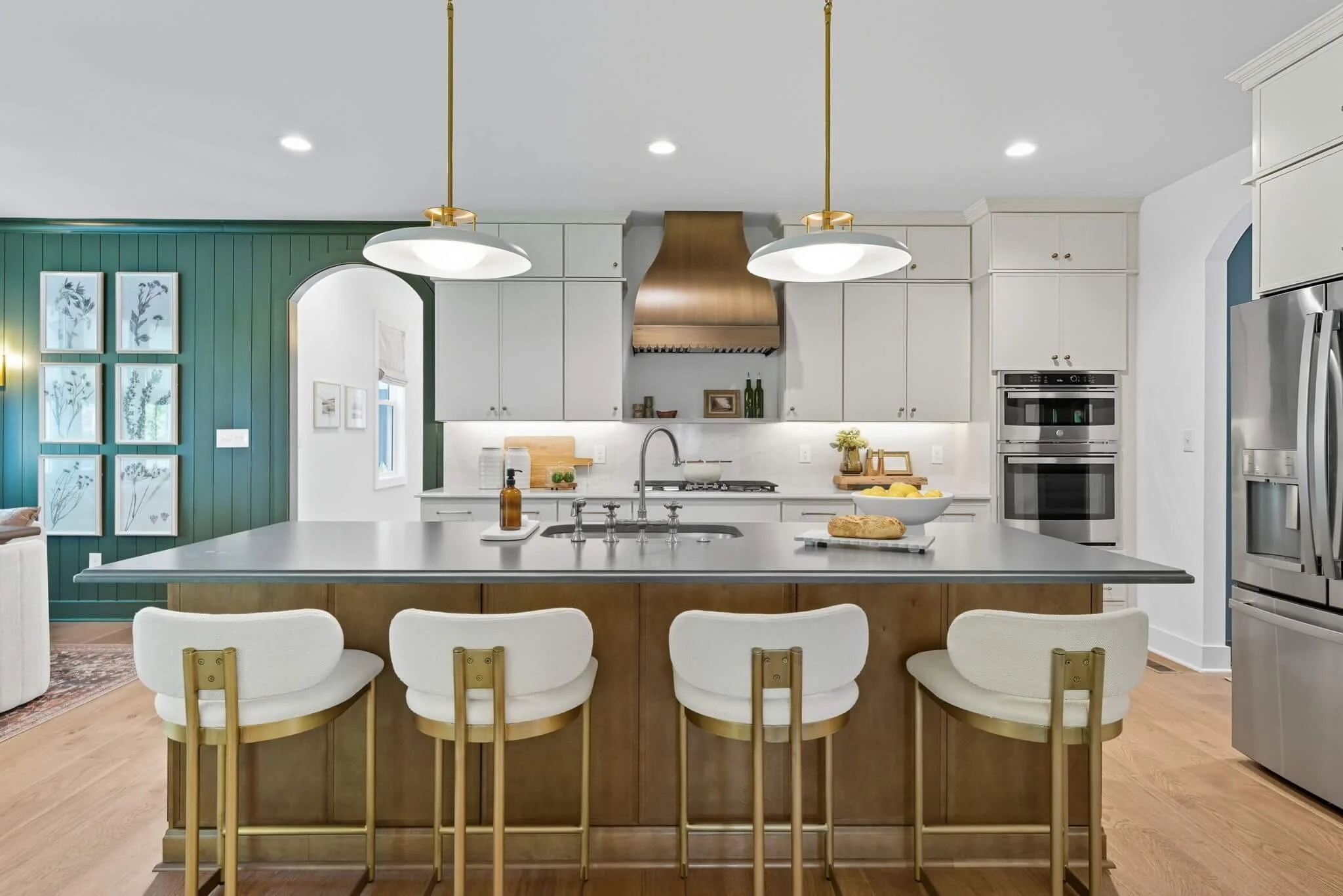
Last year's kitchen trends post focused on smart technology, sustainability, and statement range hoods. Those innovations haven't disappeared — but the conversation has shifted. In 2026, the question driving kitchen design isn't "what's new?" It's "how does it feel?"
The industry data confirms what we're seeing with our Richmond clients. The National Kitchen & Bath Association's 2026 Kitchen Trends Report found that 72% of design professionals named transitional and timeless style as the most popular direction for the next three years. Wood grain is surpassing painted cabinetry in demand. And the palette has moved decisively away from cool whites and grays toward something warmer, earthier, and more grounded.
This is a kitchen that wants to feel lived in from day one — collected rather than assembled, handcrafted rather than mass-produced, warm rather than clinical. Here's what that looks like in practice.
The All-White Kitchen Has Left the Building
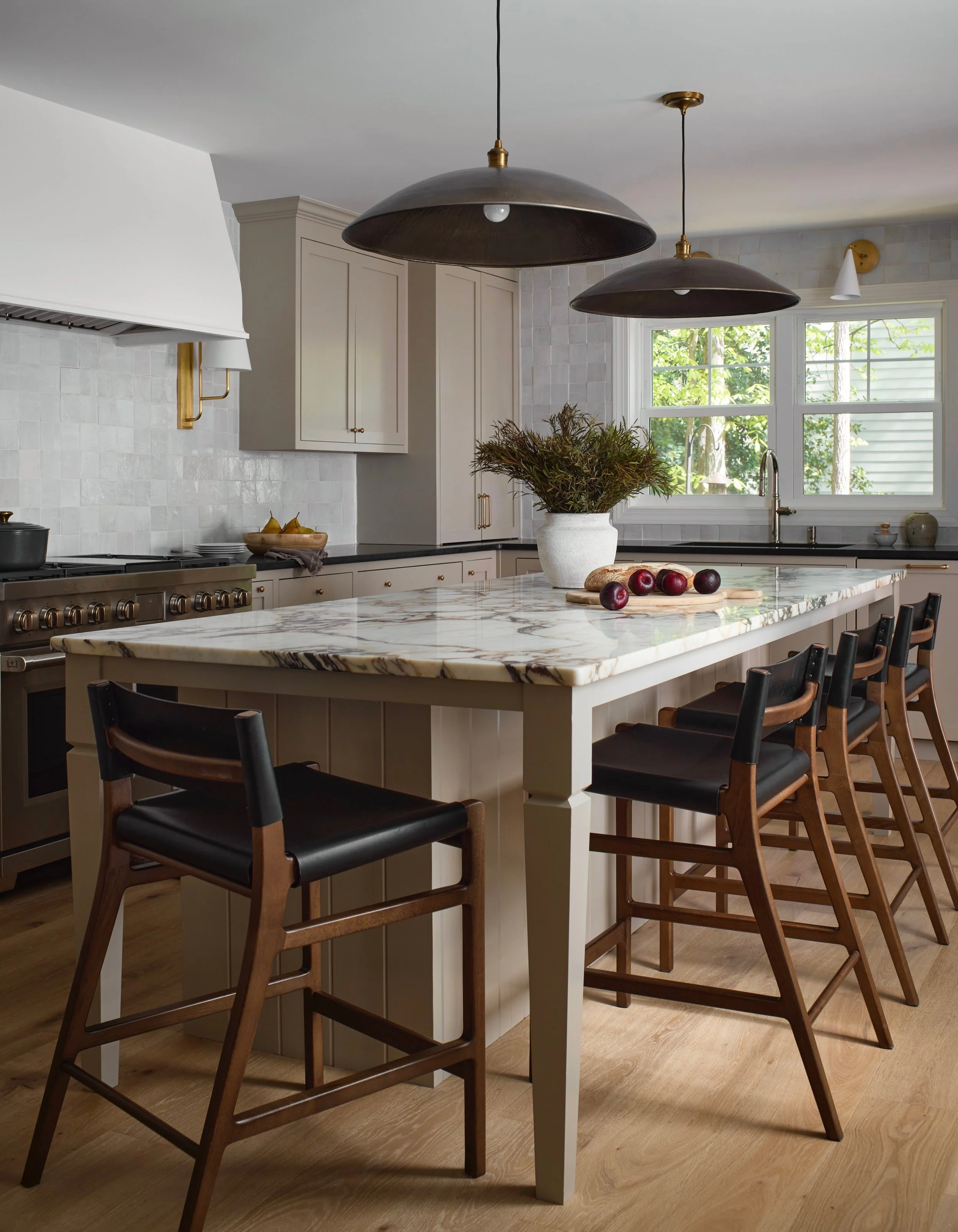
This is the biggest single shift from recent years, and it's worth saying plainly: the era of bright white cabinetry, cool gray countertops, and stainless-everything is over. It photographed beautifully. It felt safe. And now it feels sterile.
What's replacing it isn't a single bold color — it's warmth. Creamy whites, soft taupes, warm beiges, mushroom, and canvas tones are becoming the new baseline. Even clients who prefer lighter kitchens are choosing palettes with depth and softness rather than stark contrast. Think parchment and buttery cream rather than bright white. Think clay and greige rather than cool gray.
The NKBA's report backs this up: 96% of design professionals still identify neutrals as the top color choice, but what counts as "neutral" has fundamentally changed. Mushroom, taupe, sand, soft clay, and oat are the new neutrals — colors that create calm without feeling cold.
For our Richmond clients, this shift feels natural. These warmer tones look right in Virginia's light and landscape. They pair effortlessly with the natural stone, warm wood, and earthy textures that define this region's best architecture.
The shift in one sentence: The 2026 kitchen palette isn't about adding a "pop of color" to a white room. It's about starting with warmth as the foundation — creamy tones, earthy neutrals, and soft textures — and building from there.
Green Moves from Accent to Anchor
If there's one color story defining 2026 kitchens, it's green. Sage, olive, moss, and forest green are showing up not as accent tiles or a single bold wall, but as full cabinetry colors — island bases, perimeter uppers, butler's pantry built-ins.
What makes green work as a kitchen "neutral" is its versatility. It reads warm or cool depending on the undertone. It pairs naturally with brass, unlacquered bronze, matte black, and nickel hardware. It complements natural stone countertops in almost any colorway. And it connects to nature in a way that gives it real staying power — unlike trend colors that feel dated within a few years.
We've been specifying green cabinetry with increasing confidence. A deep olive island base paired with a creamy tile backsplash and quartzite countertops creates an earthy kitchen that feels both fresh and timeless. The homeowners who choose green almost always say the same thing: they wanted something that wouldn't feel dated in ten years. Green, surprisingly, delivers that better than most colors.
Green stone countertops are part of this story too. Emerald-toned quartzite and verde marble are gaining traction as statement surfaces — bold enough to anchor a kitchen, natural enough to read as organic rather than trendy.
Wood Cabinetry Returns — and It's Not Blonde
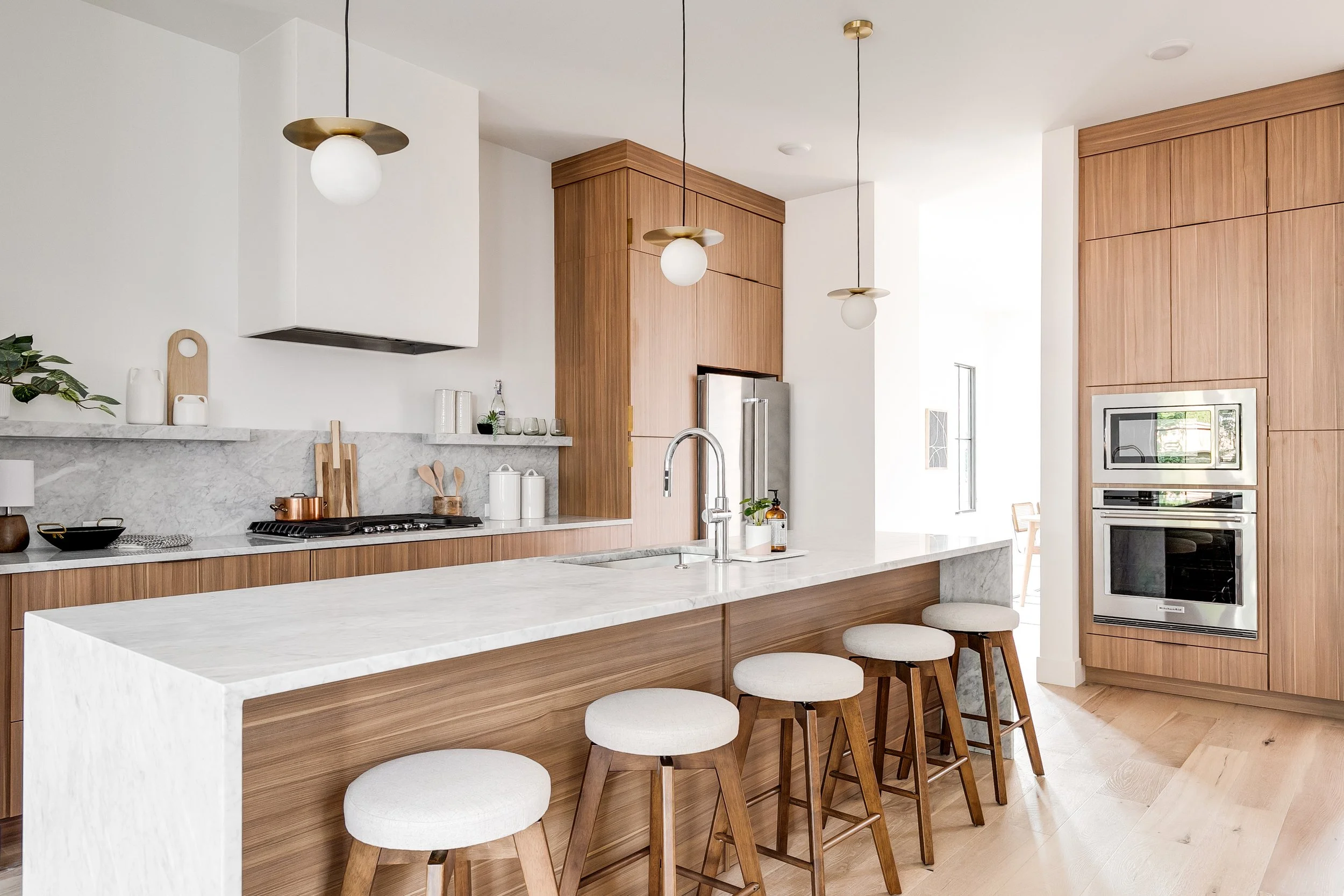
The light oak era is fading. After years of Scandinavian-inspired blonde wood dominating everything from floors to cabinets, warmer and richer wood tones are taking over.
Walnut, cherry, hickory, and rift-cut white oak with warmer stains are in high demand. The NKBA reports that wood grain is now surpassing painted finishes in popularity, with white oak as the most requested species. But clients aren't asking for the pale, bleached oak of recent years — they want depth, texture, and character. Cerused and wire-brushed finishes are adding visual interest. Darker stains are making a comeback for those who want richness and lushness in their kitchens.
What's In
Walnut, cherry, hickory, rift-cut white oak with warm stains. Cerused and wire-brushed textures. Finishes with depth, grain character, and a sense of being established.
What's Fading
Blonde, bleached, or pickled oak. Light Scandinavian-inspired finishes. Anything that reads more "showroom" than "lived-in." These had a long run — and now the pendulum is swinging warmer.
The appeal is both aesthetic and practical. Warm and medium wood tones hide wear better than their lighter counterparts, and they bring an immediate sense of warmth to new construction that can otherwise feel stark. There's a coziness to walnut cabinetry paired with soft neutral walls and naturally veined stone that light oak simply doesn't provide.
Butcher block and wood surfaces are also returning as island countertop alternatives to stone — adding warmth and a connection to traditional craftsmanship that feels right in this moment.
The Rise of the Furniture-Style Kitchen
One of the most interesting shifts in 2026 is the move away from kitchens that look like they were ordered from a single cabinet catalog. Instead, designers and homeowners are building kitchens that feel collected — as if the pieces were gathered over time rather than installed in a single day.
This shows up in several ways:
Islands are becoming furniture pieces. Fluted paneling, decorative trim, turned legs, and contrasting materials are replacing the sleek, monolithic boxes of recent years. A kitchen island with a walnut base, furniture-style legs, and a marble top reads more like a piece you'd find in a European farmhouse than a production kitchen.
Unfitted cabinetry is gaining ground. Instead of wall-to-wall matching cabinets, some kitchens are incorporating a mix of built-in cabinetry and freestanding furniture-style pieces — a hutch functioning as a coffee bar, an open-shelf unit for everyday dishes, a standalone pantry cabinet. The result feels more personal and less standardized.
The kitchen hutch is back. These pieces function as pantry cabinets, coffee bars, microwave stations, or baking centers. They break up long runs of identical cabinetry and add the kind of character that makes a kitchen feel like a room rather than a showroom.
The best kitchens in 2026 don't look like everything was ordered on the same day. They look like they were built with intention, layered with care, and finished by someone who loves to cook.
Traditional Details, Modern Execution
Traditional style is back in the kitchen — but it's not your grandmother's version. The new traditional feels relaxed and warm, not formal or fussy.
Curves and arches are softening the hard angles of modern kitchen design. Arched range niches, rounded island edges, barrel-vaulted pantry ceilings, and curved cabinetry profiles are all part of this shift. These elements guide the eye, improve flow, and make kitchens feel more approachable.
Millwork is returning in a big way. Inset cabinetry, plate racks, paneled range hoods, wainscoting, and layered crown molding are showing up in new construction at every price point. These details add architectural weight and visual interest to kitchens that might otherwise feel flat.
Subtle Art Deco threads are adding personality without feeling costume-y. Geometric tile patterns — chevrons, star-and-cross motifs, and checkerboard layouts — are showing up on backsplashes and floors. Fluted cabinet fronts and brass accents nod to the 1920s and '30s. The key is restraint: one or two Deco-inspired details in a room, not a full period recreation.
Richmond has always appreciated classic architecture. These details bring that same sense of place and quality to custom kitchens being built today.
Textured, Handmade, Imperfect
Flat, seamless surfaces are giving way to materials that show the hand of the maker. The pursuit of flawlessness is being replaced by an appreciation for character.
Handmade zellige tile is the defining backsplash material of the moment. Its irregular edges, subtle color variation, and artisanal character create warmth that machine-made tile simply can't replicate. Terra-cotta zellige is particularly popular — it adds an earthy, grounded quality that pairs beautifully with warm wood cabinetry and unlacquered brass fixtures.
Natural stone is getting bolder. Clients are gravitating toward quartzite and marble slabs with dramatic, organic veining — surfaces that feel sculptural and one-of-a-kind. Soft greens, warm browns, gold tones, and bold movement are in demand. And finish preferences are shifting too: matte, honed, and leathered surfaces are replacing high-gloss polished stone, reducing glare and hiding fingerprints while adding tactile richness.
Limewash and textured plaster are moving beyond accent walls and into kitchens — on range hood surrounds, pantry interiors, and accent walls adjacent to the cooking zone. The subtle variation catches light differently throughout the day, creating an effect that flat paint simply can't match.
Why imperfection wins: These materials aren't trying to look perfect. They're trying to feel real — and that's what makes them age so well. A limewashed wall develops more depth over time. Zellige tile tells a story. Natural stone becomes more beautiful with use. In a world of mass production, these finishes stand out precisely because they're not replicable.
Everything Disappears: Integrated Design Gets Serious
One of the clearest kitchen-specific trends for 2026 is the demand for visual calm. Clients want full functionality with clean sightlines — and the solution is integration.
Panel-ready appliances are now expected rather than exceptional. Refrigerators, dishwashers, and even coffee stations disappear behind cabinet fronts, letting the kitchen read as a warm room rather than a showroom of stainless steel. The NKBA reports that panel-faced refrigeration is growing in popularity among 72% of respondents and panel-faced dishwashers among 85%.
Hardware is disappearing too. Push-to-open cabinets, touch-latch doors, and integrated pulls create sleek surfaces without visible handles. This works particularly well with flat-panel cabinetry, where the clean lines let material choices — wood grain, painted finishes, stone — take center stage.
The butler's pantry is the real MVP. Also called a prep kitchen, this secondary space hides the mess while keeping the main kitchen camera-ready. Pocket doors conceal prep zones, small appliances, and everyday clutter. Hydraulic-lift cabinets hide stand mixers when they're not in use. The goal is a kitchen that looks calm and curated even in the middle of weeknight dinner.
Lighting is going architectural. Instead of statement chandeliers and pendant clusters, we're seeing more cove lighting, illuminated niches, and fixtures recessed into millwork. Under-cabinet LEDs, backlit open shelves, and toe-kick lighting provide ambiance without visible hardware. The NKBA found that under-cabinet lights (82%), interior cabinet lights (72%), and pendant lights (63%) top the demand list — but the pendants are shifting toward sculptural, asymmetrical arrangements rather than matching sets.
Islands Get Bigger, Smarter, and More Social
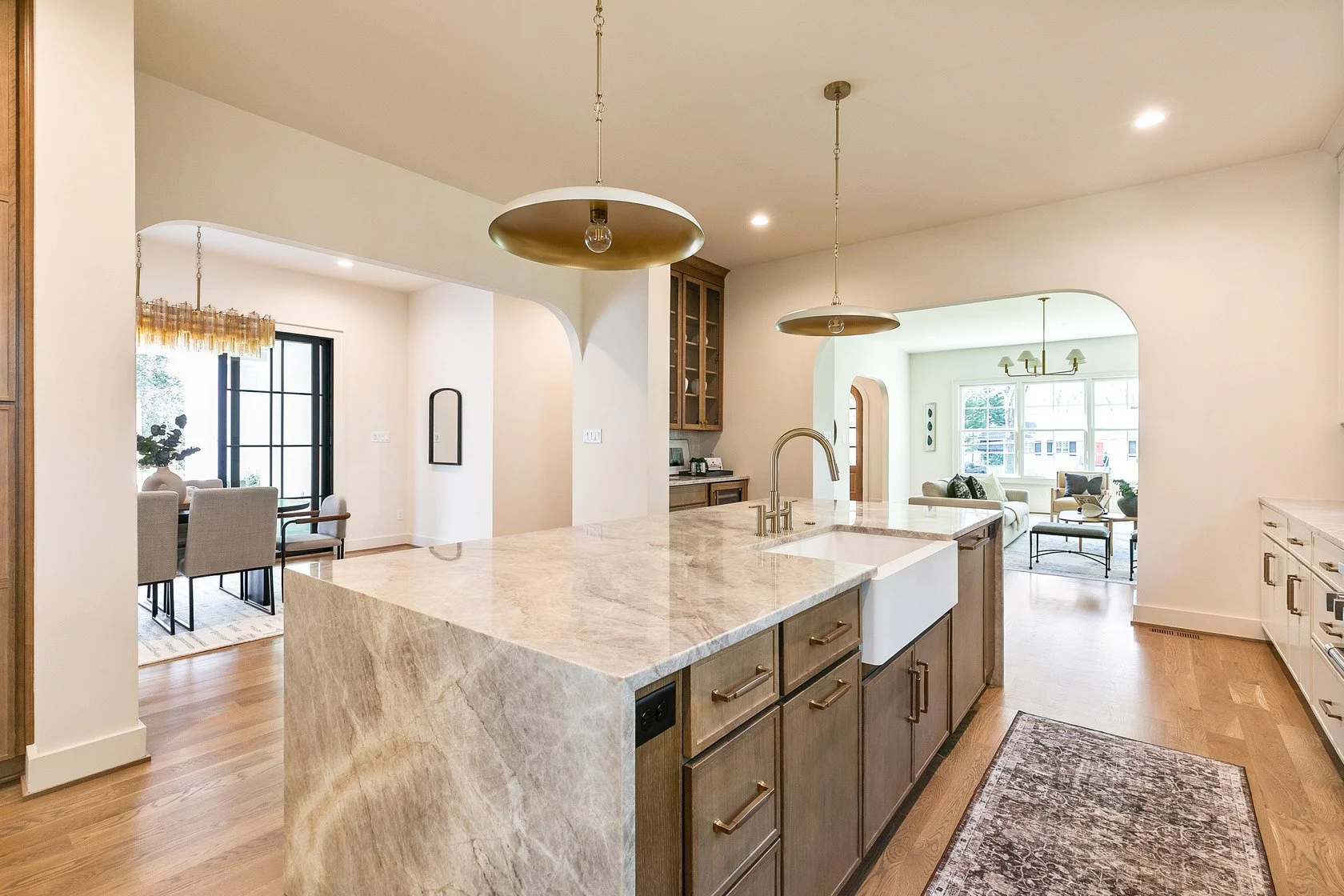
Kitchen islands have been growing for years — but 2026 takes them in a more intentional direction. Islands are becoming the social and functional center of the home, not just a prep surface with stools.
We're designing islands with varying counter heights for different activities — a lower section for kids' homework, a raised bar for morning coffee, a standard height for food prep. Built-in appliances like induction cooktops, prep sinks, and even beverage coolers are being integrated into the island itself.
The design language is changing too. Furniture-style details, fluted paneling, and contrasting materials make the island feel like a statement piece rather than an extension of the perimeter cabinets. Two-tone approaches — a darker or wood-toned island against lighter perimeter cabinets — create depth and visual anchoring.
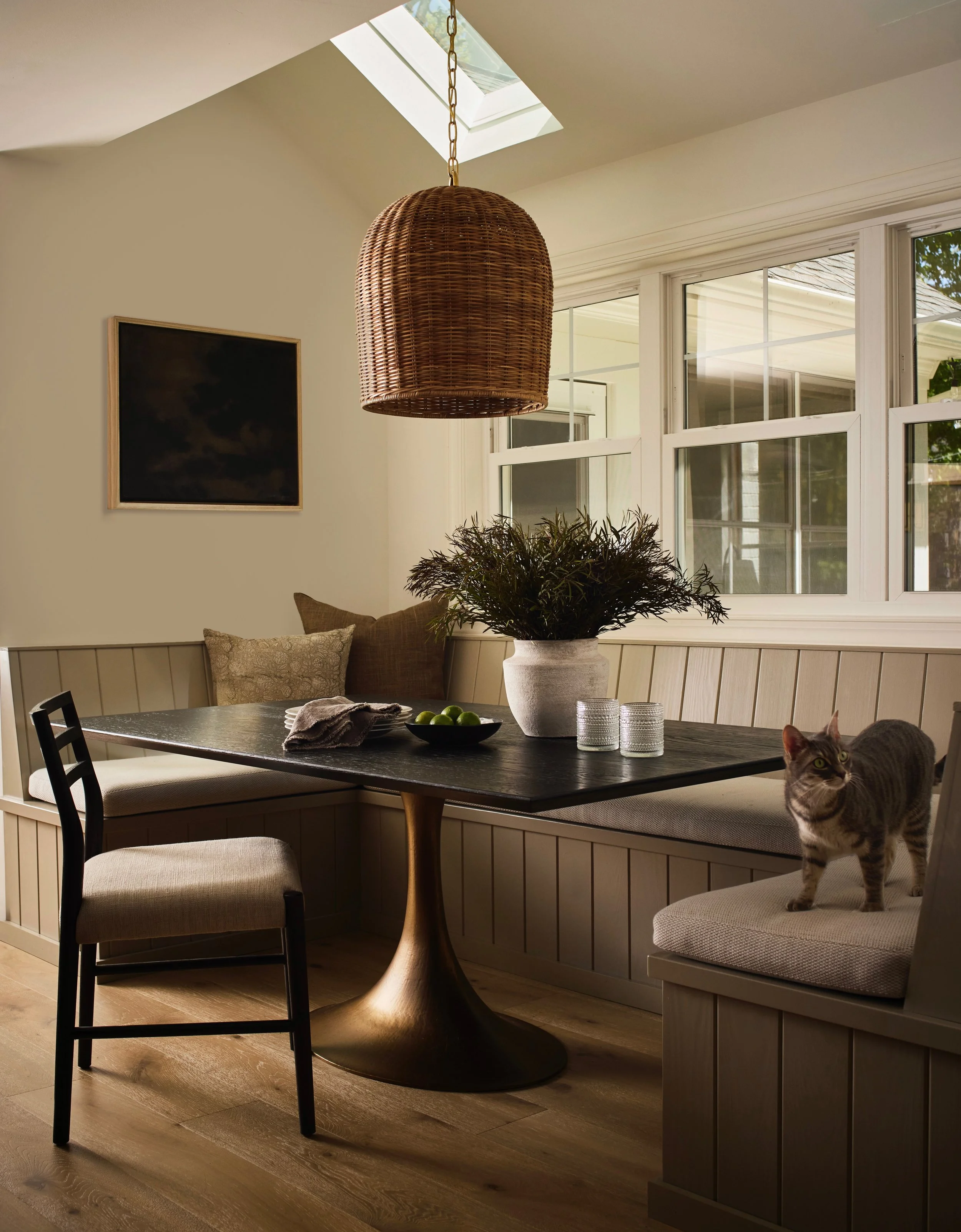
Built-in banquettes are returning as well, either adjacent to the island or tucked into a breakfast nook. They're a compact way to create dining space while encouraging people to gather in the kitchen — which, let's be honest, is where everyone ends up anyway.
What's Fading in Kitchen Design
Every year, some things run their course:
All-white everything. Cool, bright, gallery-like kitchens have lost their appeal. Clients want warmth, texture, and color — even if it's subtle.
Blonde oak cabinetry. The pale Scandinavian look is giving way to warmer, richer wood tones with more depth and character.
Modern farmhouse shiplap and open shelving. Both had a good run. Open shelving in particular is declining in favor of concealed storage — homeowners prefer clean countertops over curated displays that collect dust.
High-gloss everything. Glossy cabinet fronts, polished countertops, and shiny backsplashes are being replaced by matte, honed, and brushed finishes that feel warmer and are more practical to maintain.
Stainless steel overload. The "professional kitchen" look is softening. Panel-ready appliances, mixed metals, and warm finishes are replacing the wall-of-stainless aesthetic.
Building a Kitchen That Lasts
The best kitchen trends of 2026 have something in common: they're not chasing novelty. Warm wood, natural stone, handmade tile, and timeless proportions are ideas that have worked for centuries. What's new is the level of integration, the quality of materials available, and the ability to customize every detail when you're building a custom home from scratch.
That's the advantage of building with Keel Custom Homes. You're not choosing from a catalog of pre-set kitchen packages. You're designing a kitchen around how your family actually cooks, gathers, and lives — finished with materials you'll love for decades, detailed with craftsmanship that gets better with age.
Ready to Design Your Kitchen?
Start with a quick estimate using our free Cost Calculator — your material and finish choices directly affect your per-square-foot price. See exactly how kitchen upgrades impact your build.
Try the Cost Calculator →Whether you're in the early dreaming phase or ready to start planning, call us at (804) 885-2688 — we'd love to talk through your kitchen vision.